2026 Resources, Proceedings, Reports
For prior years, see 2025 Resources, 2024 Resources, 2023 Resources or 2022 Resources
The Land Restoration School will be in session Tuesdays through Fridays, beginning June 2nd through August 12th, 2026. (Not in session June 19 or July 3.)
2026 draft schedule at a glance (updated 26 April)
(right: LRS Council Ring in a planning meting with Mequon Nature Preserve staff, December 2025)

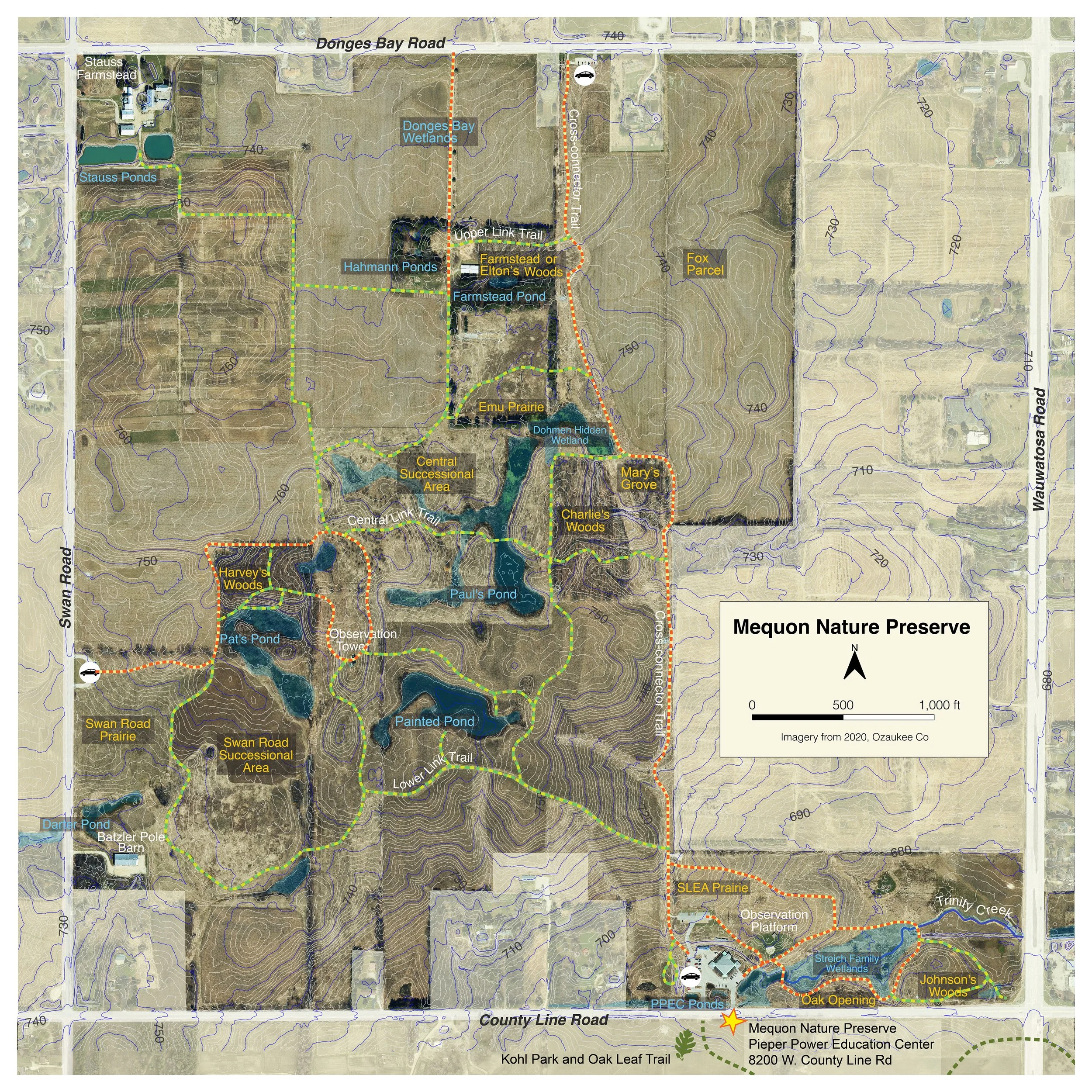
Mequon Nature Preserve Location and Trail Map
LRS will spend the majority of its days at our partner Mequon Nature Preserve. We will meet in classrooms at the Education Center, outdoors in a range of habitats, and will also have fieldwork sessions at MNP.
MNP is a guiding example of habitat restoration with a long-term plan, by returning its land to a mosaic of forests, prairies, and wetlands by breaking drain tile in the agricultural fields, removing invasive species, planting native trees and shrubs, and throwing down native plant seed.
Restoring Lands: A Wisconsin Land Trust
Map of some Restoring Lands Preserves
Our partner Restoring Lands hosts fieldwork and learning at some of its Preserves representing a range of habitat type, land use history, and restoration trajectory. RL land stewardship staff who will lead the fieldwork and learning sessions are filled with insightful and practical knowledge about effective land restoration and management that they readily share.
Spirit Lake Preserve of Restoring Lands
This is a special place. LRS has been involved in defining, editing, and management of non-local plants and in helping create a connected public trail system joining Spirit Lake and its ancient oaks with Pukaite Woods. LRS will continue its engagement with this place.

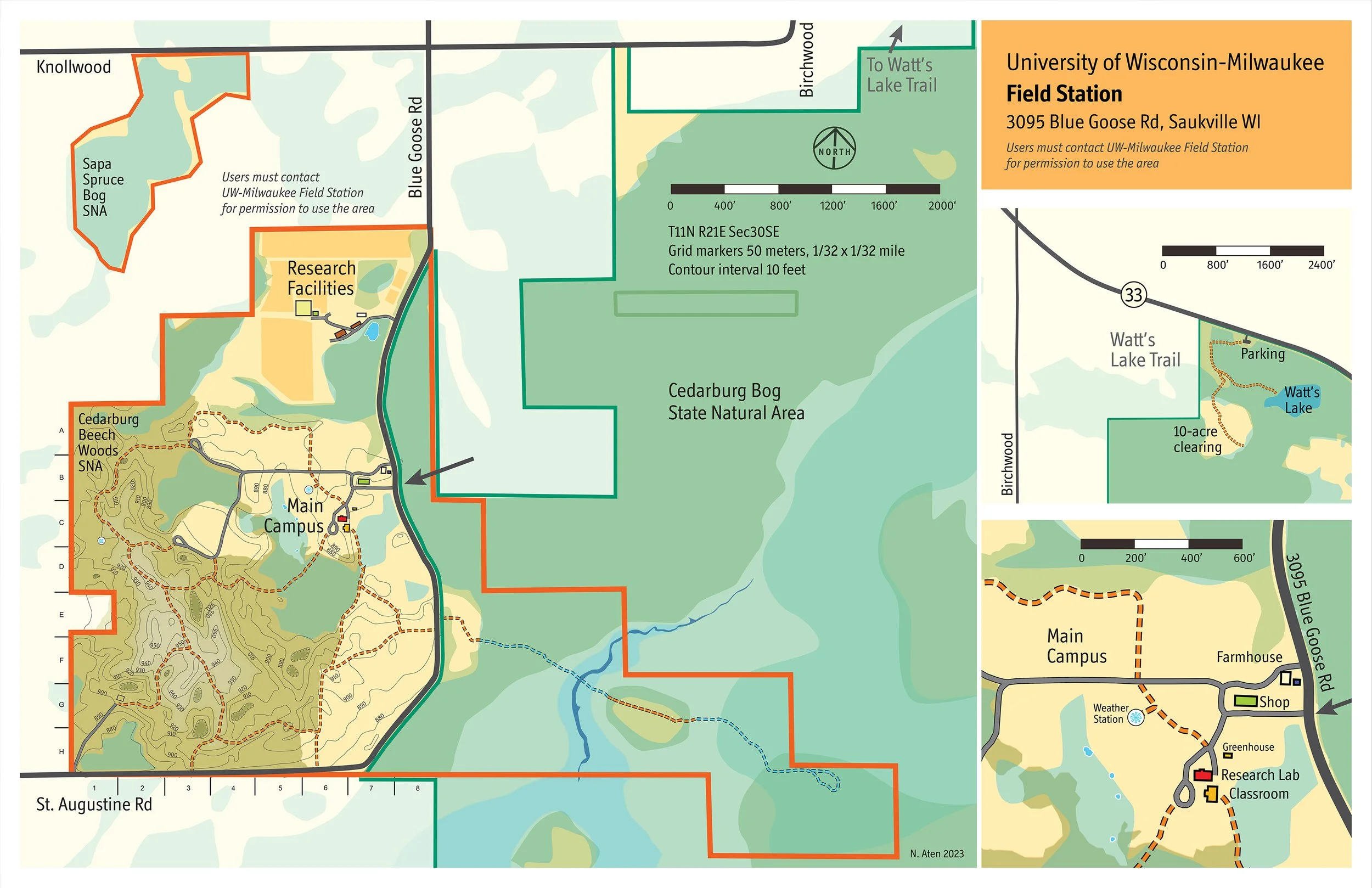
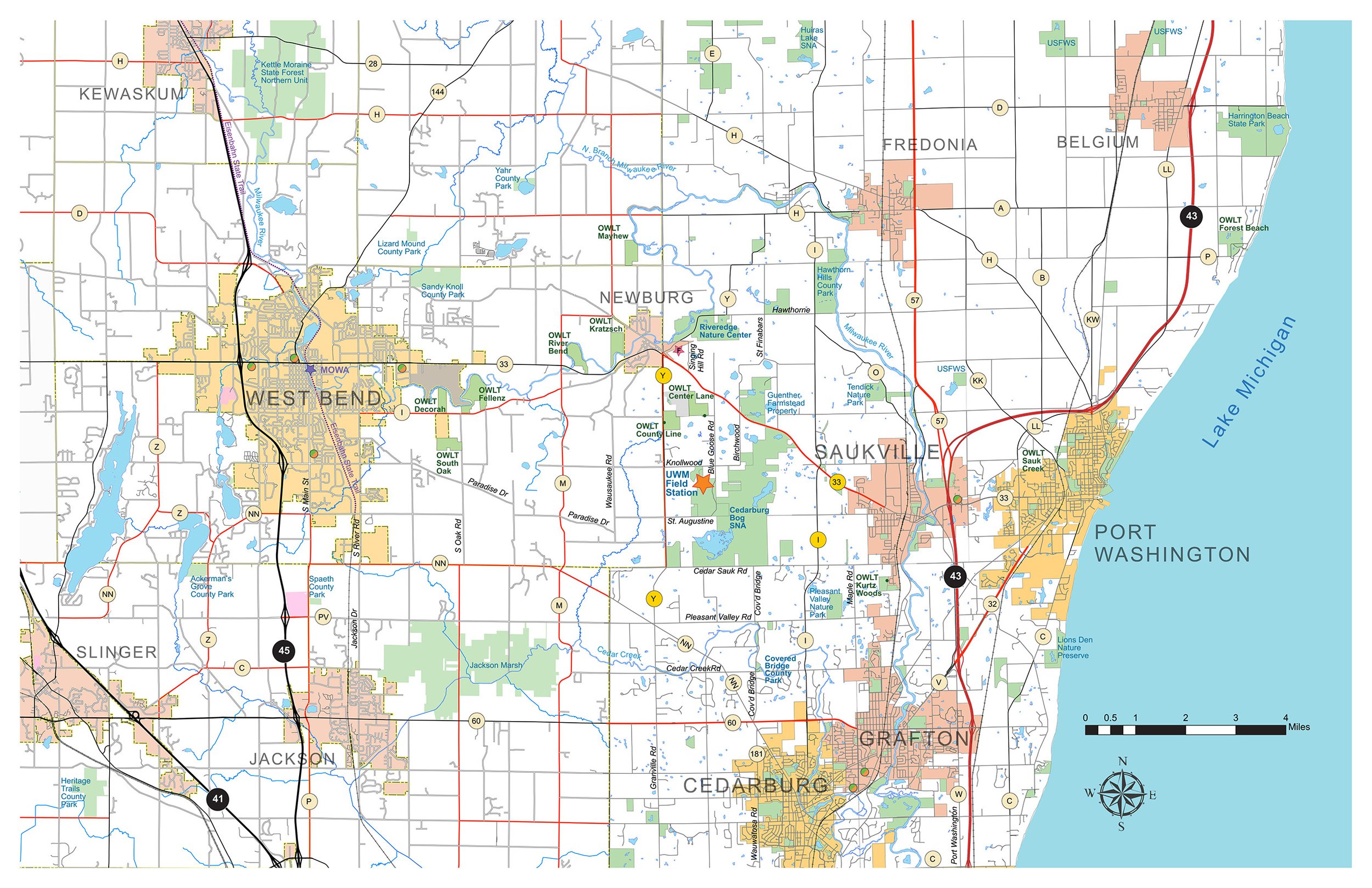
University of Wisconsin-Milwaukee Field Station
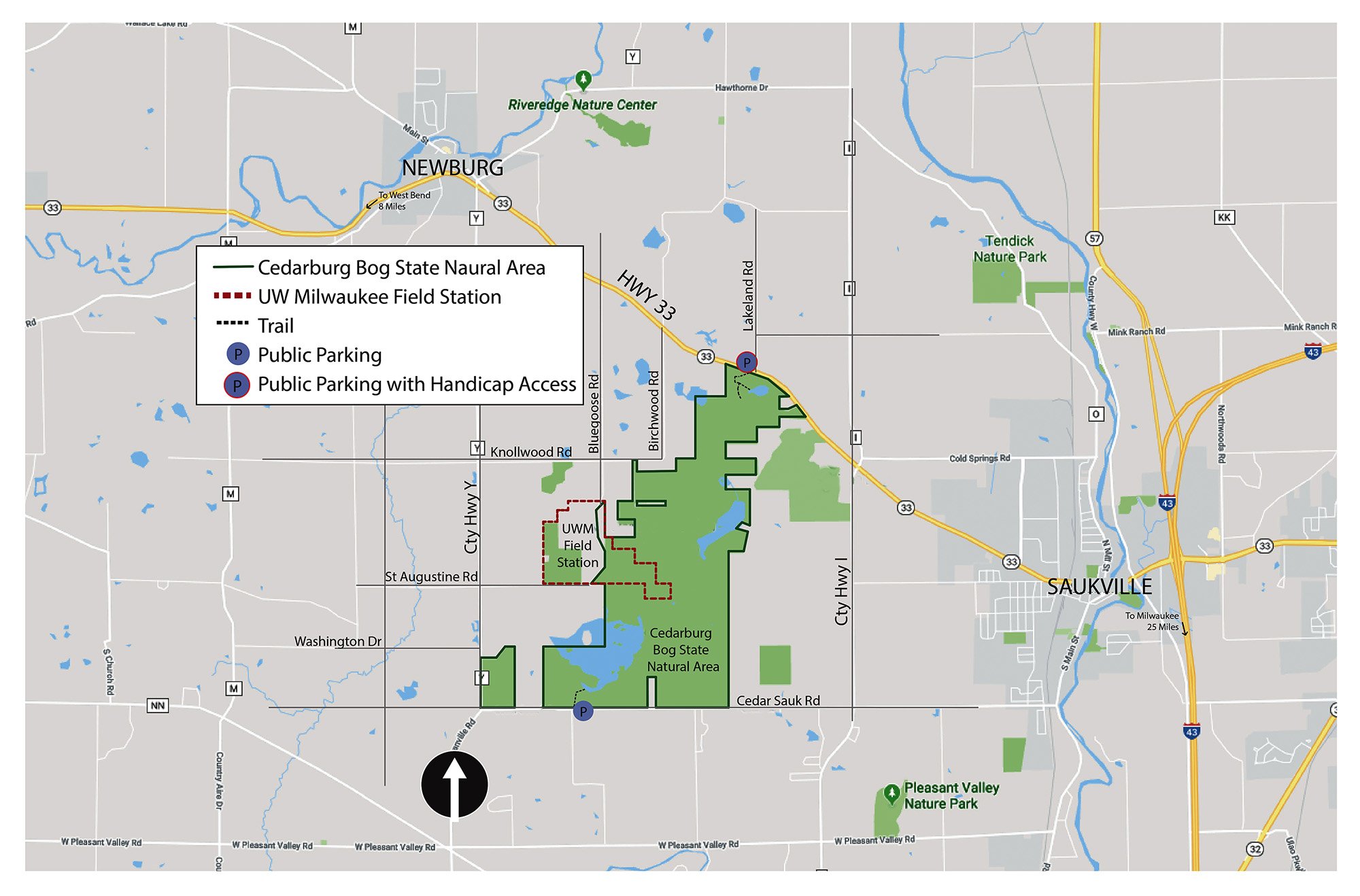
Map of Cedarburg Bog (courtesy Friends of Cedarburg Bog)
We will spend a full week and a day at the Field Station, staying overnight during that week in the farmhouse together.
This renowned Field Station is located within the largest intact wetland complex in southeastern Wisconsin. It contains a range of habitats including upland glacial landscapes from oldfield to forest, several kinds of wetlands, and deep and shallow bog lakes. The UW-Milwaukee Field Station provides a range of wonderful learning landscapes and educational facilities.